DOC –
Health Services:
The Providers
Team
3 — Business, Junior Designer, Me
Client
DoctorOnCall
Overview
DoctorOnCall is a dedicated website designed to provide doctor consultation, order medications, and facilitate healthcare professionals in showcasing their services, expertise, and specialties to a wider audience. This case study delves into the user-centered design process behind the creation of Health Services — a subset of their platform dedicated to helping healthcare professionals build credibility and connect with patients.
The Business Plan
In the healthcare industry, many skilled professionals and institutions struggle to effectively market and promote their services. There is a need for a user-friendly platform that allows healthcare practitioners to create comprehensive profiles, highlight specialised services and qualifications, and connect with patients seeking care.
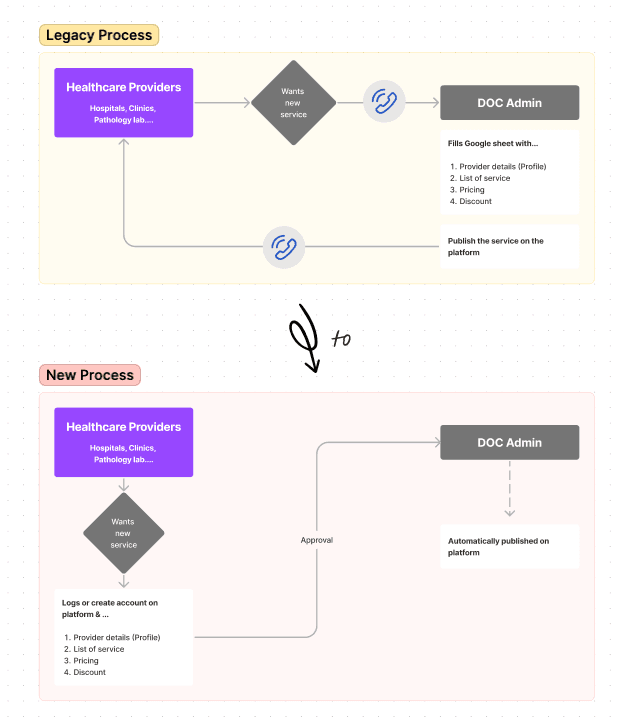
DOC had an existing system that was rigid and manual — controlled entirely by in-house admins via a CMS. The legacy process was rudimentary at best and created a significant bottleneck. The business case was clear: give providers the power to create and manage their own content, freeing up internal resources and automating the entire flow.
Current Process
The clinic sends descriptions of their packages and contents via Google Sheets and email to the Healthcare division. A DOC admin then manually inputs the content and builds each package through the CMS.
Updated Process
Providers create an account on the DOC platform and build their own packages from a master item list maintained by DOC. If an item is missing, they can request it be added — directly through the platform.
Step 2 — The Acceptance
After the business defined the idea, my next step was to validate that enough providers would actually adopt the new process. I joined business stakeholders on visits to top providers to discuss the change firsthand.
I applied Atomic Design principles — breaking packages (molecules/organisms) down to their smallest atoms. This required extensive back-and-forth with SMEs to confirm feasibility. I designed process flows, walked stakeholders through user journeys, and used paper prototypes to show intended screens and interaction patterns.
I interviewed around 15 providers— 12 were enthusiastic about the new process, while the remaining 3 were somewhat apprehensive. The consistent feedback was relief: they wouldn't have to wait on us (the bottleneck) to create or update their products. Offering guided onboarding support in the early stages gave the hesitant providers the added confidence they needed.
Step 3 — Solving Problems
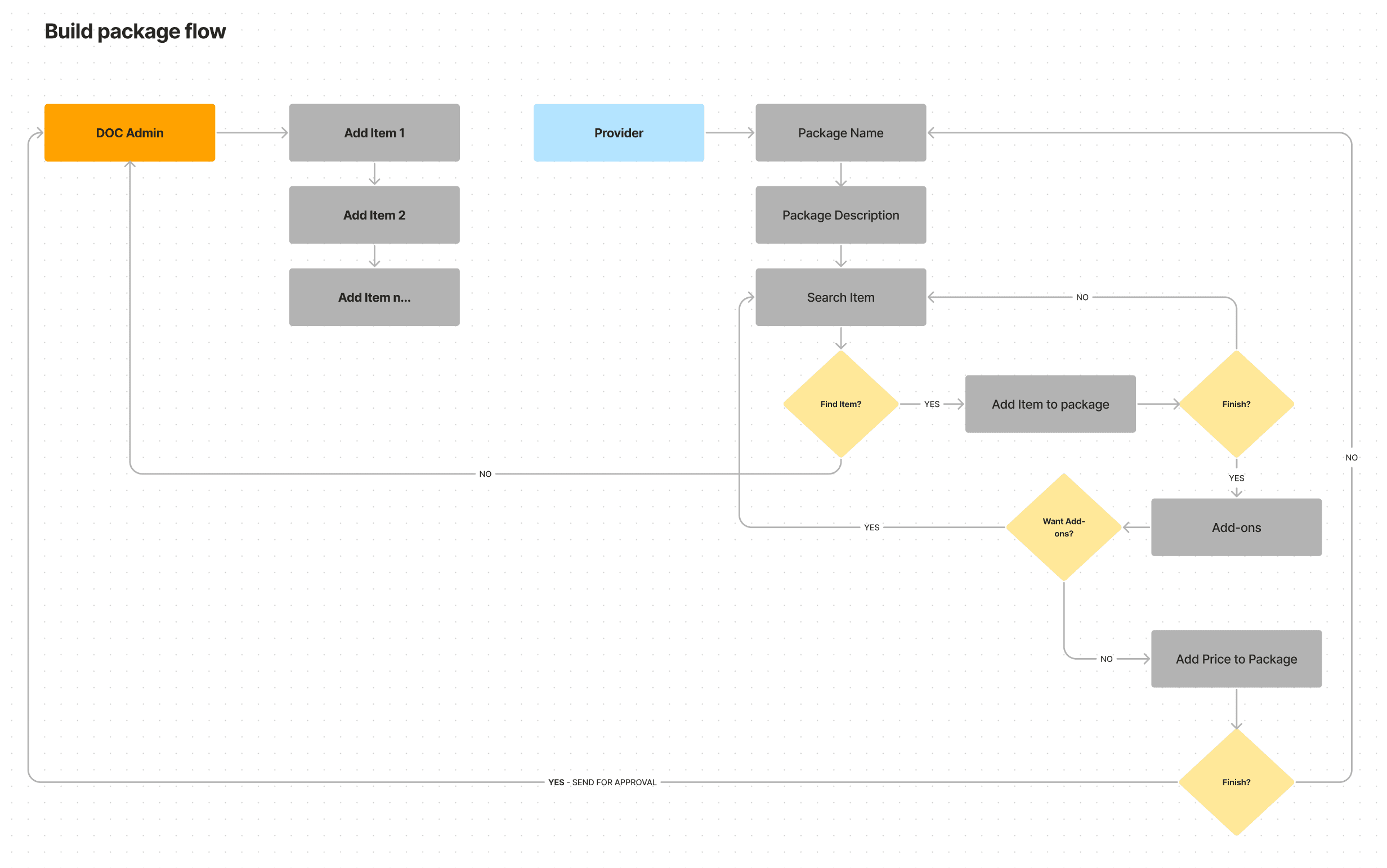
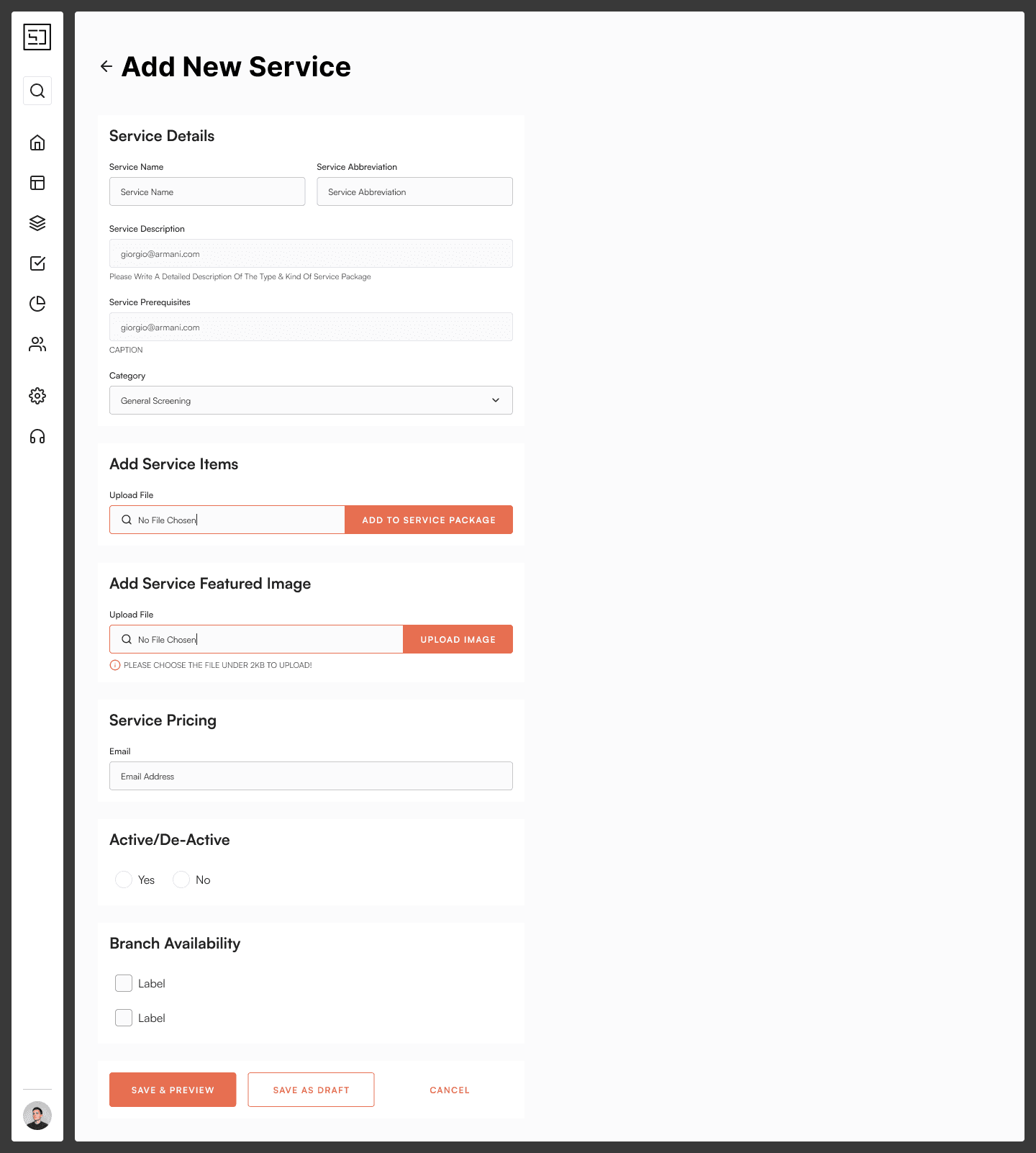
Problem 1 — Creating & Publishing a Custom Package
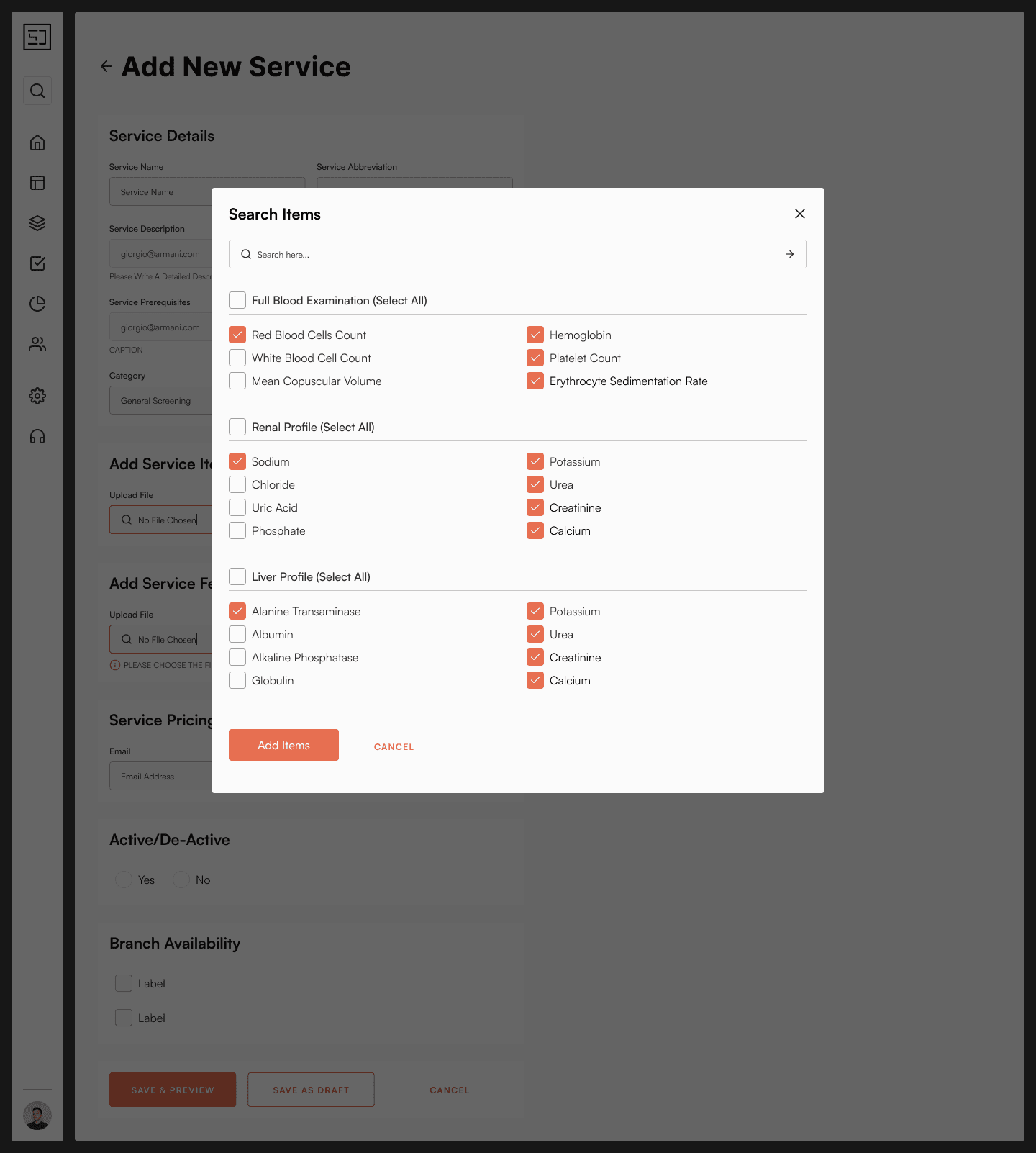
Working with in-house SMEs and clinic partners to arrive at an optimum package-creation flow:
- DOC admin defines the base item library; providers pick items and assemble their packages.
- Providers can name, price, edit, and add add-ons to any package.
- If a needed item doesn't exist, providers submit a request for it to be added to the database.
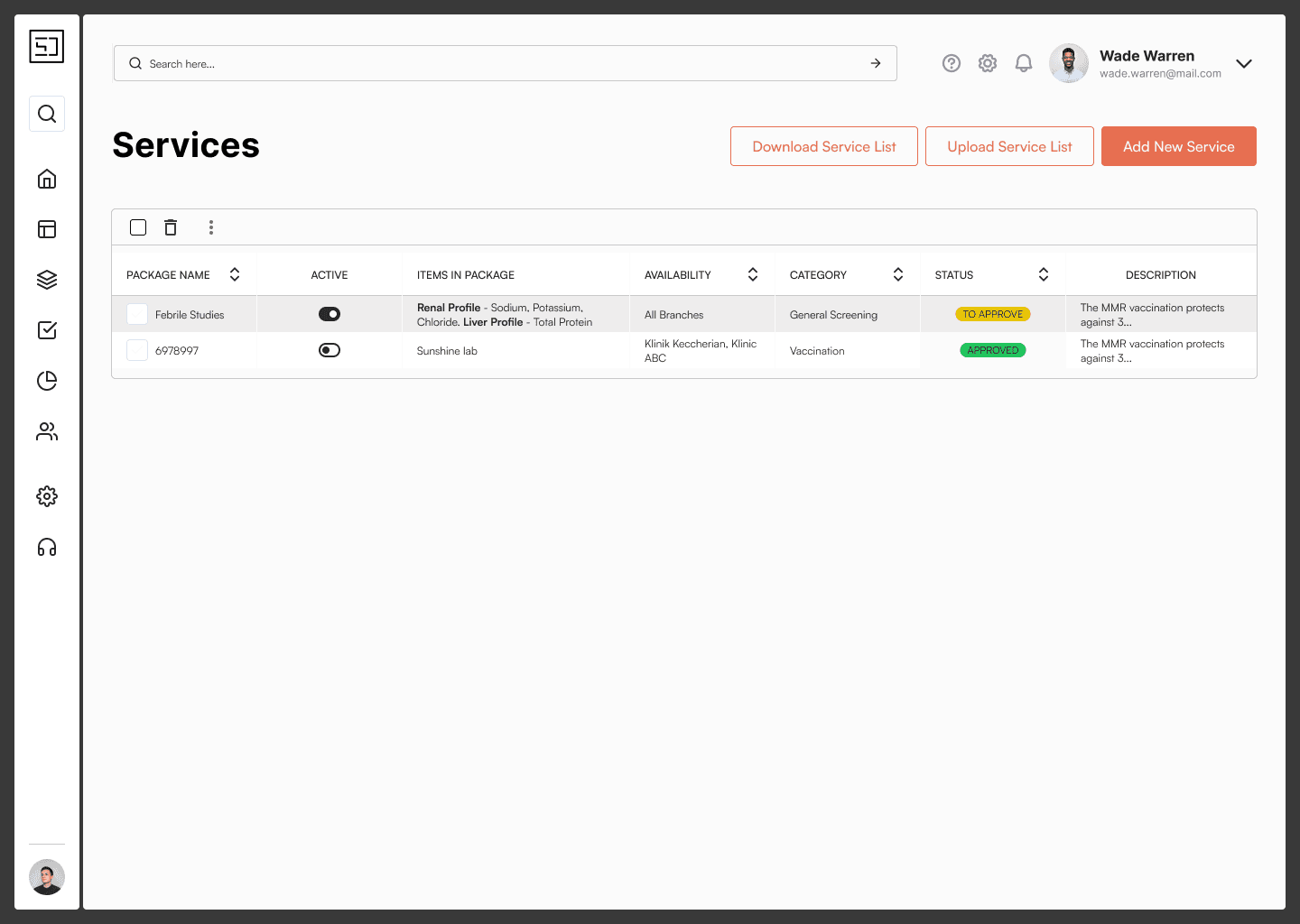
Problem 2 — Bulk Upload for Large Catalogues
After testing the package upload module with clinics, a new concern surfaced: some providers had hundreds of packages to migrate. They needed a way to bulk-upload an entire catalogue at once. I returned to the drawing board and designed a feature where providers receive a pre-formatted Excel template, fill in each package's field details, and upload the file — creating all packages in a single action.
The Results
We shared a walkthrough video with all providers ahead of launch. Despite the UI not being as polished as I had envisioned, the adoption rate far exceeded expectations — only 10% of providers required any additional hand-holding after go-live.
Today, while DoctorOnCall undergoes a broader UI refresh, providers continue to onboard independently and the package catalogue grows without any admin intervention.
Beyond the Health Services module, I was also involved in several other areas of the marketplace platform: Redemption module, Commissions module, Discounts & Category management.